Ordering a meal, asking for directions, or checking into a hotel can become surprisingly difficult when neither person shares the same language. Reaching for a phone may help, but it also interrupts eye contact and slows the exchange. Smart AI Bluetooth Glasses offer a more hands-free way to hear and respond to translated speech while staying engaged with the person in front of you. Their usefulness, however, depends on language support, background noise, connectivity, and the importance of the information being discussed. Understanding these limits helps travelers decide when the glasses are convenient and when another translation method is safer.
How Translation Glasses Keep a Conversation Moving
Listen Without Dropping Eye Contact
Most travel conversations become awkward when attention keeps shifting between the other person and a phone. Smart AI Bluetooth Glasses reduce that interruption by placing the microphone and audio output close to the wearer, allowing the phone to stay in a pocket or bag. The glasses collect spoken input, the connected service identifies and translates it, and the result reaches the wearer through sound or the linked app. Because recognition and processing take time, the experience is better described as near-real-time than perfectly simultaneous.
Consider hotel check-in after a long flight. The receptionist may explain breakfast hours, a deposit, Wi-Fi access, and check-out while the guest is still managing luggage. Wearable translation lets the traveler follow the main points without lowering their head after every sentence. Sustained eye contact also makes gestures, key-card demonstrations, and other visual cues easier to notice.
Reply Without Passing a Phone Back and Forth
Two-way communication requires more than hearing the other person. The traveler can speak a short response, let the system translate it, and then play or display the result. This avoids repeatedly handing over a personal device or changing the microphone direction, while facial expressions and gestures remain part of the exchange. Smart AI Bluetooth Glasses improve flow even when the translated reply still appears on a companion app.
Short sentences work better than long explanations. Each speaker should pause after one idea, and names, numbers, or locations should be repeated separately. The main gain is reduced friction, not a guarantee that wearable translation will outperform every phone app for every language pair.
The Travel Moments Where They Help Most
Hotels, Restaurants, and Shops
Structured service encounters suit Smart AI Bluetooth Glasses because the questions are usually focused and predictable. Travelers can confirm a booking, ask how a dish is prepared, request another size, or clarify payment without repeatedly unlocking a phone. Brief exchanges also make it easier for both people to rephrase a sentence when the first translation is unclear.
Extra caution is needed whenever a mistake has consequences. Allergy information should be confirmed with a written card or responsible staff member, while hotel fees, cancellation terms, warranties, and return policies should be checked in writing. Wearable translation can begin the conversation, but it should not settle important conditions by itself.
Airports, Stations, Taxis, and Transfers
Transport settings combine urgency, noise, and limited attention. A passenger may need to understand a gate change while holding documents, confirm a taxi destination, or ask where to transfer. Lightweight Smart AI Bluetooth Glasses help because the traveler does not need a free hand to position a phone between speakers.
Translation and navigation remain different functions. The glasses may clarify spoken directions, while schedules, live routes, and service alerts still depend on the connected phone or posted information. Gate numbers, times, platforms, terminals, and destinations should always be repeated and checked visually.
Brief Conversations With Local People
A visitor might ask a market vendor how a product is used, request a nearby lunch recommendation, or check a place name. Translation support lowers the anxiety of starting these exchanges and provides a fallback when vocabulary runs out. The best experience comes when the device supports eye contact rather than dominating the interaction.
Basic greetings, thanks, and apologies are still worth learning. Starting in the local language shows respect and gives the other person time to adjust their speech. Smart AI Bluetooth Glasses can then assist with missing words or key ideas instead of translating every sentence automatically.
Situation
Main communication difficulty
How the glasses may help
What should be verified
Hotel check-in
Fast instructions
Translate short questions hands-free
Room, fees, and check-out time
Restaurant ordering
Menu terms
Support questions about dishes
Allergens and dietary needs
Public transport
Delays and route changes
Clarify spoken directions
Gate, time, and destination
Shopping
Sizes and prices
Keep brief exchanges moving
Final price and return terms
Local conversation
Limited vocabulary
Preserve eye contact
Names and recommendations
Where Misunderstandings Usually Begin
Noise, Accents, and Several People Speaking
Translation quality depends on the system hearing the speaker correctly before it translates anything. Traffic, music, terminal announcements, wind, and nearby conversations can distort the input or cause the microphone to capture the wrong voice. Side speech, regional accents, and non-native pronunciation can also make recognition less consistent, particularly when several voices are present.
Simple adjustments can improve the result. Face the speaker, move closer without invading personal space, and step away from loudspeakers or traffic where possible. Only one person should speak at a time, especially during questions containing numbers or unfamiliar names. Even with noise-reduction microphones, Smart AI Bluetooth Glasses cannot restore information that was never captured clearly.
Slang, Names, Numbers, and High-Stakes Details
Everyday language contains more than dictionary meanings. Slang, jokes, indirect politeness, and regional expressions may produce a fluent translation that misses the intended meaning. Proper names are also vulnerable because an unfamiliar street, station, hotel, or person may be replaced with a similar-sounding common word. Prices, dates, platform numbers, and departure times are risky because one incorrect digit can change the traveler’s next action.
Ask the speaker to repeat the key point slowly, separate the number from the sentence, and confirm it in writing. Smart AI Bluetooth Glasses should not be the only method used for medical care, border procedures, legal matters, emergency instructions, or serious allergies. Speed and translation quality do not always improve together, so critical decisions deserve a second channel of confirmation.
Set Up the Glasses Before You Leave Home
Check the Language Pair, App, and Connection Requirements
A product may support many app or interface languages without offering the same coverage for two-way speech translation. Confirm that both the source and target languages work specifically in translation mode. Smart AI Bluetooth Glasses may also require a paired phone, companion app, mobile data, or Wi-Fi, so test the complete workflow with the phone and account that will be used abroad.
Run the test in both directions because understanding local speech and translating the traveler’s reply are separate tasks. Check whether any resources can be downloaded for limited offline use, and save hotel addresses, booking references, emergency numbers, and essential phrases outside the glasses. Screenshots or printed cards remain available when the battery, connection, or app does not.
Test Them in Conditions Closer to Real Travel
A quiet room is not a realistic test for a station, market, or café. Try Smart AI Bluetooth Glasses in moderate background noise and ask another person to speak from a normal distance. Practice starting, pausing, repeating, and stopping translation until the controls feel familiar. Bluetooth stability, microphone position, speaker volume, and app response should all be checked.
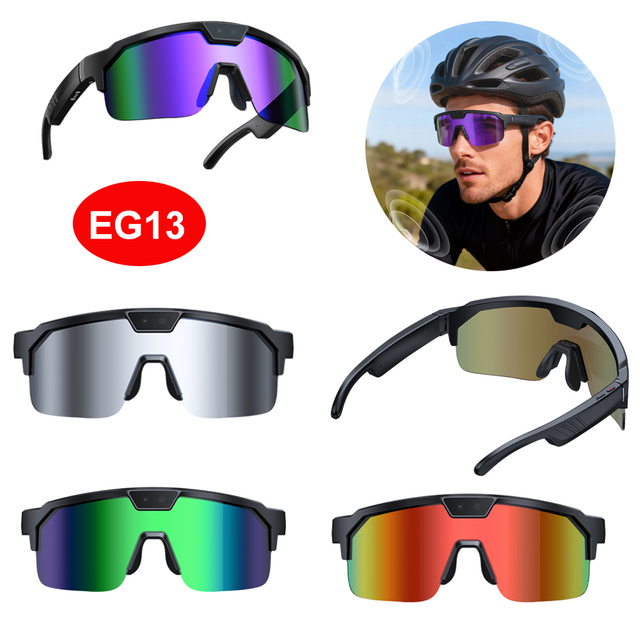
Comfort and durability also influence communication. Heavy frames or temple pressure become distracting during long days, while poor battery planning can remove translation when it is most needed. The 4P-Touch EG11 and EG12 combine real-time multilingual translation, voice activation, and ENC dual microphones. EG11 uses a 49-gram frame with IP66 protection, while EG12 includes a water-resistant daily-use structure, app-linked controls, and a 290 mAh battery. Travelers should still confirm that their required language pair is available before departure.
Explain the Device and Respect Privacy
People may not know whether camera-equipped glasses are translating, recording, or simply being worn. A short explanation—“I am using these glasses to translate our conversation”—reduces uncertainty and gives the other person a chance to object. Ask permission before taking photos, recording video, or saving audio, even when those functions are separate from translation.
Venue policies may differ in airports, government buildings, religious sites, museums, workplaces, and private spaces. Translation needs do not override consent or confidentiality. Remove or deactivate Smart AI Bluetooth Glasses when someone appears uncomfortable or when the setting calls for extra discretion.
Glasses, Phone, or Human Help: Choose the Right Tool
Use Glasses for Short, Frequent, Hands-Full Exchanges
Smart AI Bluetooth Glasses make the most sense when a traveler expects many brief interactions. They are useful while carrying bags, holding tickets, pushing a stroller, or handling purchases because translation can begin without reorganizing everything in hand. Eye contact also matters during hotel service, shopping, and casual conversations, where constantly looking down can make the exchange feel distant.
The strongest use cases involve a clear question, a short answer, and limited consequences if the sentence must be repeated. Travelers who need translation only once or twice may gain little over a phone they already carry. Those who communicate frequently across a supported language pair are more likely to notice the convenience.
Switch Tools When Accuracy Matters More Than Convenience
A phone is better when both people need to read, edit, or compare a longer passage. Written translation also suits addresses, reservation conditions, ingredients, prices, schedules, and instructions that must be reviewed more than once. Human assistance is safer for medical, legal, immigration, emergency, and emotionally sensitive communication.
Before buying, compare language-pair support, microphone performance, output method, phone compatibility, connectivity, battery life, comfort, privacy controls, and weather resistance. Ask what happens when the network drops and whether the reply can be shown to the other person. Smart AI Bluetooth Glasses are most valuable when they fit real travel routines and have a dependable backup.
Conclusion
AI translation glasses are most useful when they keep brief travel conversations moving without forcing users to look down at a phone. They can support hotel check-ins, restaurant orders, transport questions, and everyday exchanges, but important details still deserve written confirmation or human help. Shenzhen Yushengchang Technology Co.,LTD offers Smart AI Bluetooth Glasses with real-time translation, voice control, and hands-free audio features designed for mobile use. For travelers, the practical value lies in choosing a model that supports the required languages, works reliably in realistic environments, and respects the people involved in each conversation.
FAQ
Q: How do AI translation glasses work?
A: Microphones capture speech, software recognizes and translates it, and the result reaches the wearer through speakers or a display. Many models rely on a paired smartphone and app.
Q: Can translation glasses translate conversations in real time?
A: Yes, but real-time translation usually includes a short processing delay. Speed varies with the language pair, connection quality, speech clarity, and translation system.
Q: Do Smart AI Bluetooth Glasses need an internet connection?
A: Often, yes. Some functions may support downloaded language resources, but full AI translation commonly requires a phone, companion app, and mobile data or Wi-Fi.
Q: How accurate are translation glasses in noisy places?
A: Accuracy can fall in airports, traffic, wind, or overlapping conversations. Facing the speaker, moving closer, and using short sentences can improve speech capture and translation.
Q: Are translation glasses better than a phone translation app?
A: Glasses are more convenient for brief, hands-free conversations, while phones are usually better for reviewing long text, correcting details, or showing written translations to another person.
Q: Can travelers rely on translation glasses for important information?
A: They suit routine travel exchanges, but medical instructions, allergies, legal matters, prices, times, and addresses should be confirmed in writing or with qualified human help.