For many families, a kids GPS tracker is no longer just a location tool. Parents increasingly want a device that helps them stay connected with their children during the school day, especially on the way to school, during pickup changes, and after classes end. That is why many buyers now focus on student-friendly GPS watches rather than simple trackers placed in a backpack. The key question, however, is not only whether a child can wear the device, but whether it is truly appropriate for a school environment where attention, safety, and classroom rules all matter at the same time. In practice, a student GPS tracker watch can be a useful choice, but its suitability depends on two important factors: whether the watch is designed to reduce distraction, and whether the school’s own device policy allows it. Apple’s Schooltime feature is specifically designed to silence notifications and reduce visual distractions, while school policies such as those published by NYC Public Schools show that internet-enabled devices, including smartwatches, may face restrictions during the school day.
1.What Makes a Student GPS Tracker Watch School-Friendly?
School Mode or Focus Mode Reduces Distraction
One of the most important features that makes a kids GPS tracker more appropriate for school is School Mode, Class Mode, or a similar focus setting. This function matters because the biggest concern many schools have about wearable devices is distraction rather than the device itself. A watch that lights up constantly, receives open-ended messages, or encourages frequent tapping during lessons is much less likely to fit classroom expectations. By contrast, a watch designed with School Mode can silence notifications, reduce available functions, and keep the display simple during class hours. That allows children to wear the device for safety and routine communication without turning it into a mini entertainment screen on the wrist. Apple says Schooltime is designed to silence notifications and make it easier to focus, while T-Mobile provides a School Mode option for its kid-focused watch lineup.
Approved Contacts Support Safer Communication
Another reason a student GPS tracker watch may be suitable for school is that child-focused devices often limit communication to approved contacts only. This is a major difference between a school-oriented kids GPS tracker and a regular smartwatch or smartphone. Instead of opening communication to unknown callers, social apps, or random messages, many student watches only allow parents, guardians, or selected trusted contacts to call or message the child. That controlled setup can make schools and parents more comfortable, because the device is being used for practical communication rather than unrestricted social interaction. T-Mobile states that only contacts on the approved list can communicate with the SyncUP KIDS Watch and that the admin manages those contact types in the companion app.
Safety Features Matter More Than Entertainment
A student GPS tracker watch is usually most suitable when it is built around safety instead of entertainment. Parents often want a kids GPS tracker that can provide route visibility, allow quick parent-child contact, and support emergency help, but they do not necessarily want to give their child full access to apps, open messaging, and online distractions. A school-friendly watch sits in the middle ground: more useful than a basic locator, but more controlled than a smartphone. That balance is what makes the category appealing to families with younger children or first-time wearable users. T-Mobile’s kid-focused watch materials emphasize approved contacts, location tracking, and emergency support rather than open smartphone-style app use.
2.Why Some Parents Choose One for School
School Commutes Create a Real Need for Visibility
Many parents choose a student watch because school travel creates times when they want location visibility without giving a child a full phone. A kids GPS tracker can help confirm that a child arrived at school, left on time, or followed the usual route home. This is especially useful for children who walk, take the bus, or move between school and after-school activities. For many families, the value is simple reassurance during key parts of the day.
Limited Communication Can Be Better Than a Smartphone
Another reason parents choose a school-ready kids GPS tracker is that it offers limited communication instead of unrestricted access. A child can contact a parent when plans change or in an emergency, while the device remains controlled through parent settings and approved contacts. This makes the watch a practical option for families who feel a smartphone would be too distracting or too early.
3.Why It May Not Be Suitable in Every School
School Policies Can Override Product Features
Even a well-designed kids GPS tracker may not be suitable if the school does not allow smartwatches during class or throughout the school day. This is one of the most important factors parents should check before buying. A watch may include School Mode, approved contacts, and quiet operation, but that does not mean the school will accept it. In many cases, local policy matters more than product features.
Distraction and Classroom Culture Still Matter
Suitability also depends on classroom expectations, not just written rules. A kids GPS tracker may be allowed, but it can still be a problem if it vibrates often, encourages repeated checking, or distracts the child during lessons. That is why quiet operation and simple design are so important. A watch with School Mode and low-distraction settings is usually more suitable for school than one with frequent alerts and interactive features.
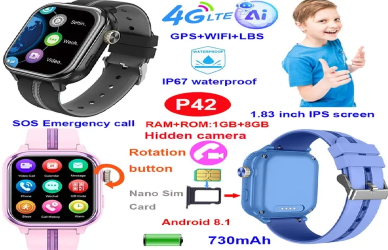
4.How to Decide if It Is the Right Choice
Parents should not choose a school-ready kids GPS tracker based only on marketing language. The better approach is to compare the watch against the child’s actual routine, the school’s rules, and the family’s communication goals. The table below can help frame that decision in a more practical way.
Situation | Why a Kids GPS Tracker May Help | What Parents Should Check First |
Child walks or rides the bus to school | Supports route visibility and arrival confirmation | GPS reliability, app alerts, school policy |
Child stays for clubs or after-school care | Helps with pickup changes and schedule coordination | Battery life, approved contacts, quiet mode |
Child is too young for a phone | Offers limited communication without full smartphone access | Calling permissions, SOS, School Mode |
School is strict about electronics | May still work only if policy allows silent or restricted wear | Written smartwatch/device rules |
Parent wants emergency access only | Provides a safer middle option than open messaging apps | Whether SOS and approved contacts remain usable in class mode |
The strongest buying decision usually happens when the watch solves a real problem rather than simply adding another gadget. If the child’s day includes transportation changes, independent walking, or after-school movement between locations, a well-designed kids GPS tracker may be a very practical tool. If, however, the child is always directly supervised and the school has strict no-device rules, the watch may create more friction than value. Apple and T-Mobile both emphasize parent controls and school-focused settings, but district policy examples such as NYC’s show that school rules still need to be checked before purchase.
5.Best Use Cases for a Kids GPS Tracker at School
Younger Students With Structured Routines
A school-oriented kids GPS tracker is often a good fit for younger students who follow a regular school-home route and need simple, parent-managed communication. These children may not need a smartphone, but they can still benefit from a watch that shares location, supports SOS, and allows a quick parent call when plans change. In this case, the value of the device comes from routine support rather than constant use. A watch worn quietly through the day and used mainly around commute times is usually much more suitable than one used actively during class.
Children Transitioning From Parent Pickup to More Independence
It is also a good option for children who are starting to manage parts of their routine more independently, such as walking to an activity, waiting at pickup points, or traveling with siblings. At this stage, a kids GPS tracker can serve as a bridge between full parental supervision and later phone ownership. Parents keep location awareness and controlled communication, while children gain more confidence and independence with an extra layer of safety.
FAQ
Can a student GPS tracker watch still track location when School Mode is on?
Often yes. A school-focused kids GPS tracker may limit notifications and messaging during class while still keeping location tracking and some safety functions available.
Is a student GPS tracker watch better for elementary school than for older students?
Often yes. A kids GPS tracker usually fits younger children better because it offers simple, parent-controlled safety support without giving full phone access.
Can a child use a GPS watch for after-school pickup even if daytime use is restricted?
Yes. Even if school-time use is limited, a kids GPS tracker can still be helpful for pickup coordination, commute monitoring, and emergency contact before or after class.
What should parents ask a school before buying a student GPS tracker watch?
Parents should ask whether smartwatches are allowed, whether silent wear is acceptable, and whether School Mode or safety exceptions are recognized.
Conclusion
A student GPS tracker watch can absolutely be suitable for wearing at school, but only under the right conditions. The best kids GPS tracker for school use is not the one with the most flashy functions, but the one that supports safety, quiet communication, and low-distraction daily use. Features such as School Mode, approved contacts, and parent-managed controls make a big difference because they help align the device with what schools and families actually need. At the same time, no product feature can replace the importance of checking the school’s own smartwatch policy first. For families that want a safer alternative to early smartphone use, a student GPS tracker watch can be a smart and practical choice when it is used primarily for commute visibility, emergency support, and controlled contact. For brands such as Shenzhen Yushengchang Technology Co., Ltd., this also highlights an important product direction: school-friendly design should focus on safety, simplicity, and policy compatibility rather than entertainment-heavy features.